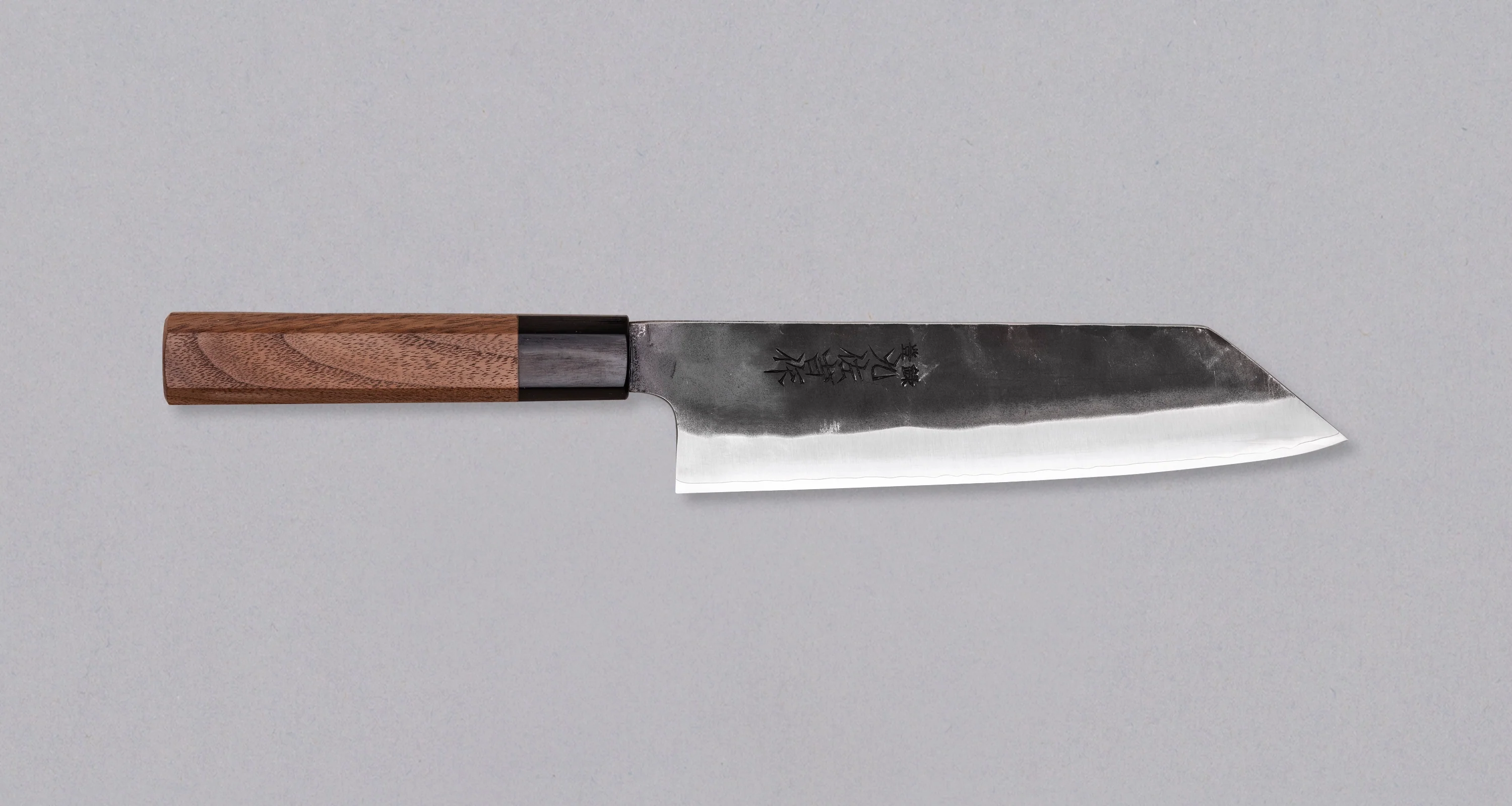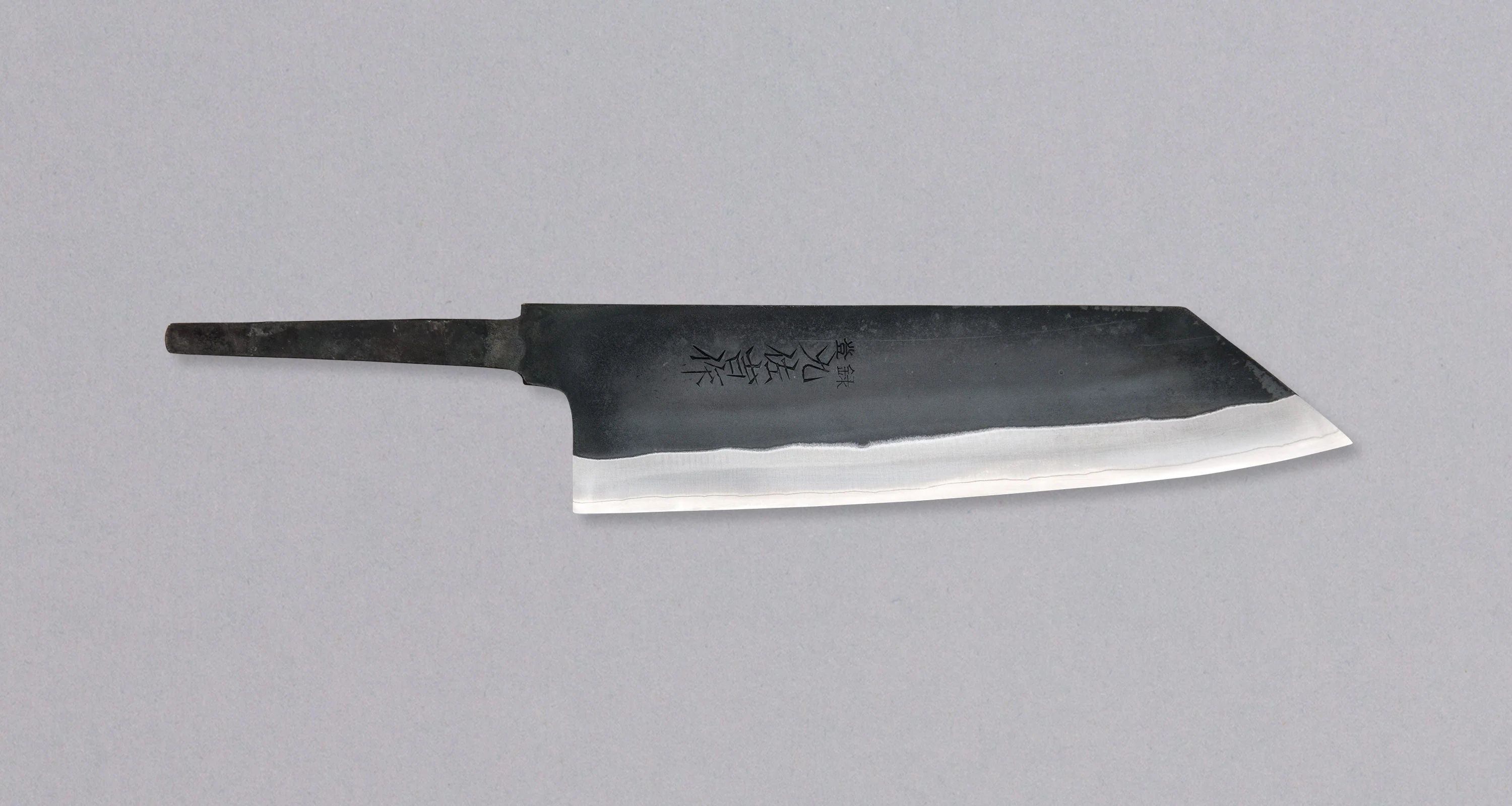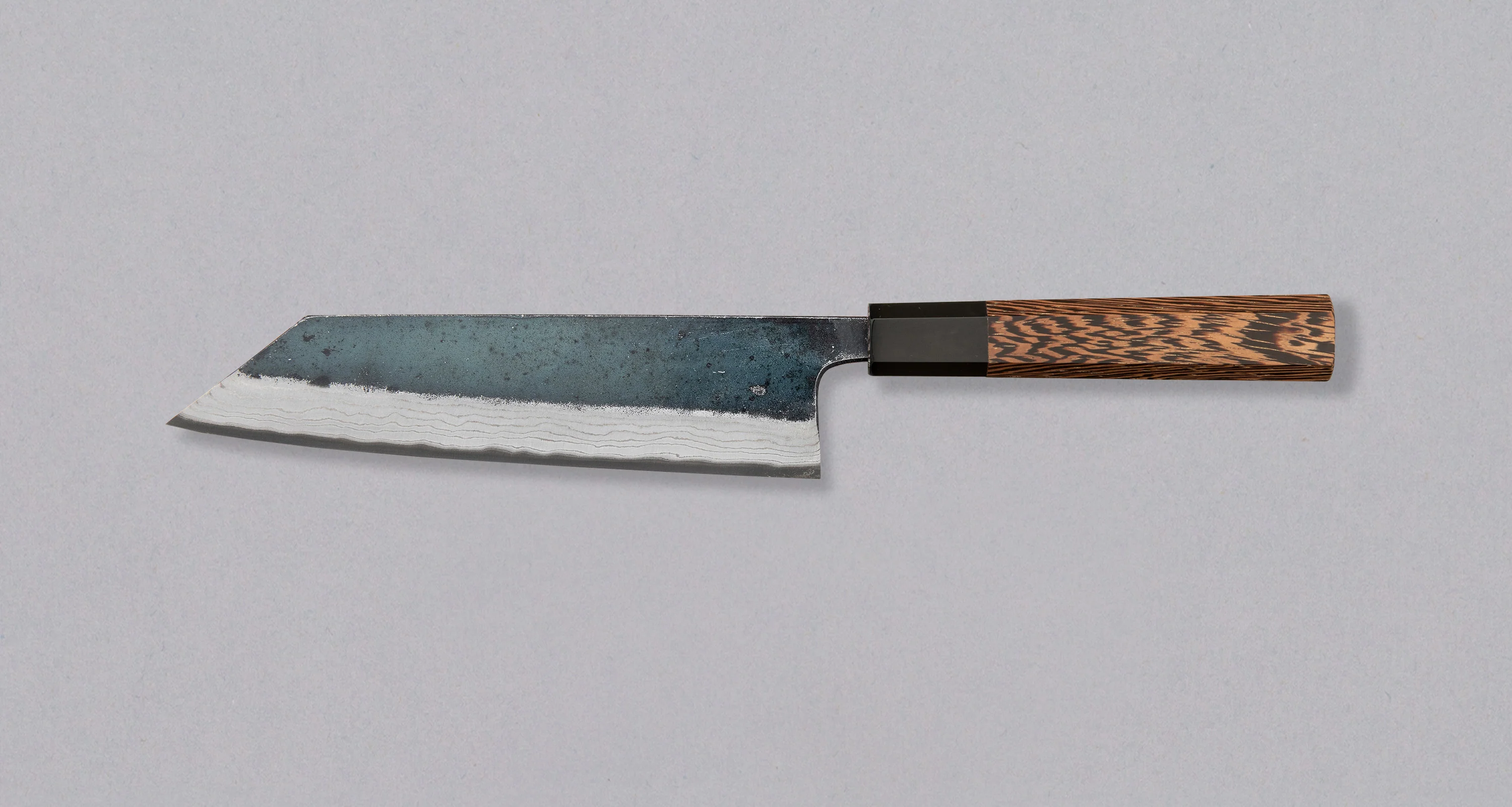


Kumokage Bunka Aogami #2 Kuro-uchi Damascus 180mm (7.1") - octagon
The Kumokage collection is made from high-quality Aogami #2 high-carbon steel. Due to its high carbon content, the core and outer layers are not corrosion-resistant, meaning the blade can develop a patina and may rust if exposed to water or other corrosive substances for extended periods.
Blade finish is excellent, but because the knife is completely handmade, be prepared to see some small imperfections on the surface.
The blade will glide through food with ease and deliver incredibly smooth cuts, thanks to Aogami #2 steel’s extremely fine sharpness. This knife feels and cuts like a true Japanese blade, and definitely looks the part as well.
BLADE SHAPE:
Kumokage Bunka Aogami #2 Kuro-uchi Damascus 180mm is a multi-purpose Japanese kitchen knife, suitable for preparing meat, fish and vegetables, with a special "K-tip" for precise cuts.
Bunka is one of the most versatile and useful blade shapes in the modern kitchen. It has a wide profile for easy food transfer and tends to be fairly flat towards the heel, enabling easy and fast chopping on the cutting board. A pointed tip allows piercing and precise, delicate work. A slight curve between the tip and the midsection makes the belly great for rocking the blade back and forth when cutting. It can be used for cutting meat, fish and vegetables.
STEEL:
Aogami #2 is a very popular steel in Japanese knifemaking and one of the finest high-carbon steels, meaning the knives forged from it will have excellent edge retention and also sharpen very easily. At the same time, it is less resistant to corrosion, meaning the blade can develop a patina, while longer exposure to water or other corrosives could also lead to rusting. This is improved to some extent with the addition of chromium and tungsten, but it’s still a high-carbon steel that should be maintained accordingly (⚠️ read more about knife maintenance here). Aogami #2 steel is composed of carbon (C) 1.1 %, chromium (Cr) 0.5 %, manganese (Mn) 0.3%, and tungsten (W) 1.5%.
LAMINATION:
The blade was laminated with soft iron, which is iron with only a small amount of carbon added to it. Laminating the blade improves its structural integrity, as the knife’s core is made of hard—and therefore brittle—high-carbon Aogami #1 steel that is prone to breakage on its own.
GEOMETRY:
It has a double bevel (symmetrical) blade.
BLADE FINISH:
Kuro-uchi (kuro meaning “black”) finish and a misty damascus finish create a rustic appearance.
The raw, untreated blade finish with a misty damascus pattern give the knife a distinct rustic appearance, summed up perfectly by the name kumokage 雲 影, which translates to “cloud shadow”.
HANDLE:
Japanese (Wa) style handle made out of wenge wood with a buffalo horn ferrule.
Product Information
Product Information
Shipping & Returns
Shipping & Returns
Description
The Kumokage collection is made from high-quality Aogami #2 high-carbon steel. Due to its high carbon content, the core and outer layers are not corrosion-resistant, meaning the blade can develop a patina and may rust if exposed to water or other corrosive substances for extended periods.
Blade finish is excellent, but because the knife is completely handmade, be prepared to see some small imperfections on the surface.
The blade will glide through food with ease and deliver incredibly smooth cuts, thanks to Aogami #2 steel’s extremely fine sharpness. This knife feels and cuts like a true Japanese blade, and definitely looks the part as well.
BLADE SHAPE:
Kumokage Bunka Aogami #2 Kuro-uchi Damascus 180mm is a multi-purpose Japanese kitchen knife, suitable for preparing meat, fish and vegetables, with a special "K-tip" for precise cuts.
Bunka is one of the most versatile and useful blade shapes in the modern kitchen. It has a wide profile for easy food transfer and tends to be fairly flat towards the heel, enabling easy and fast chopping on the cutting board. A pointed tip allows piercing and precise, delicate work. A slight curve between the tip and the midsection makes the belly great for rocking the blade back and forth when cutting. It can be used for cutting meat, fish and vegetables.
STEEL:
Aogami #2 is a very popular steel in Japanese knifemaking and one of the finest high-carbon steels, meaning the knives forged from it will have excellent edge retention and also sharpen very easily. At the same time, it is less resistant to corrosion, meaning the blade can develop a patina, while longer exposure to water or other corrosives could also lead to rusting. This is improved to some extent with the addition of chromium and tungsten, but it’s still a high-carbon steel that should be maintained accordingly (⚠️ read more about knife maintenance here). Aogami #2 steel is composed of carbon (C) 1.1 %, chromium (Cr) 0.5 %, manganese (Mn) 0.3%, and tungsten (W) 1.5%.
LAMINATION:
The blade was laminated with soft iron, which is iron with only a small amount of carbon added to it. Laminating the blade improves its structural integrity, as the knife’s core is made of hard—and therefore brittle—high-carbon Aogami #1 steel that is prone to breakage on its own.
GEOMETRY:
It has a double bevel (symmetrical) blade.
BLADE FINISH:
Kuro-uchi (kuro meaning “black”) finish and a misty damascus finish create a rustic appearance.
The raw, untreated blade finish with a misty damascus pattern give the knife a distinct rustic appearance, summed up perfectly by the name kumokage 雲 影, which translates to “cloud shadow”.
HANDLE:
Japanese (Wa) style handle made out of wenge wood with a buffalo horn ferrule.