

Yu Kurosaki Nakiri Gekko VG-XEOS Migaki 165mm (6.5")
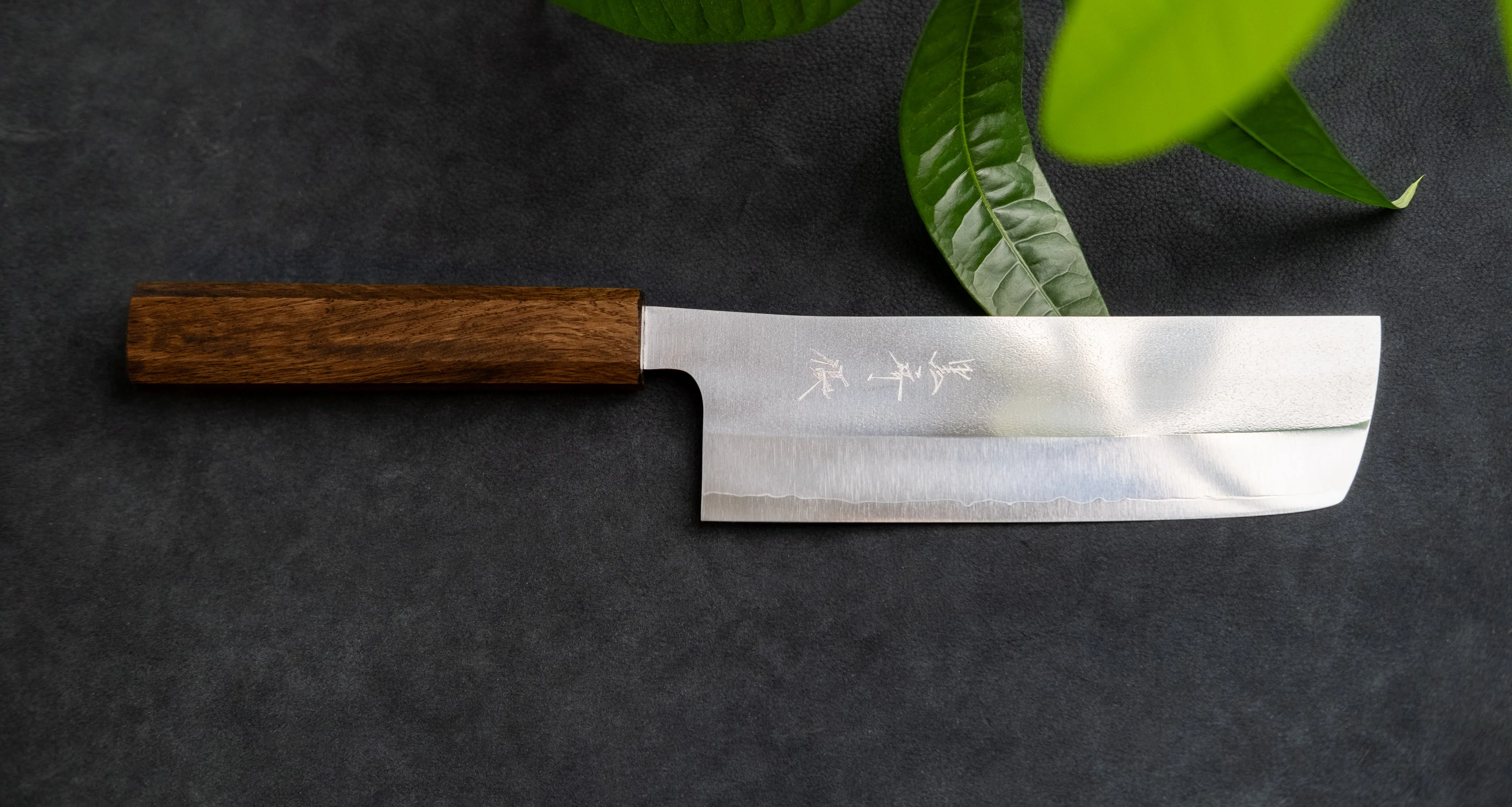
Kurosaki Nakiri from the Gekko line is another special blade from the hands of a talented master blacksmith Yu Kurosaki. The minimalistic, lightweight, perfectly balanced blade is treated to a high polish − hence the name Gekkō (月光) which means moonlight in Japanese.
The secret of this knife lies in a new VG-XEOS steel, which has excellent resistance to wear and corrosion. This is a knife that will be appreciated in the hands of a prep cook with mountains of veggies to prepare every day.
BLADE SHAPE:
Nakiri is made for one purpose - chopping vegetables. If you prepare and cook a lot of veggies, but already have a knife for cutting meat/fish, a nakiri knife is a great choice for your needs. Recently, many nakiris find their way into home kitchens - it's a perfect knife for vegetarians and veggie lovers. The blade is 165mm (6.5").
HANDLE:
The Kurosaki Gekko line features a traditional Japanese oak wood handle (Wa) with a universal, octagonal shape that comfortably fits in the hands of both right- and left-handed users. The whole handle is made of one piece of wood (without a ferrule).
STEEL:
VG-XEOS is a high-quality stainless steel produced by Takefu Special Steel, known for steels such as VG-10 and VG-5. It is an alloy that combines strong corrosion resistance with high hardness and wear durability. The blade hardness is approximately 62 HRC. The fine microstructure is achieved through a special melting method that improves wear resistance, strength, and quenching properties.
VG-XEOS is designed for high-performance cutting tools, delivering excellent sharpness, good edge retention, and corrosion resistance.
LAMINATION:
The steel is laminated, meaning that the core is made of very strong steel covered with an external layer of softer stainless steel − also known as san-mai clad.
→ Read more on Blade construction: Lamination.
GEOMETRY:
It has a double bevel (symmetrical) blade (50/50). The blade is convexly sharpened.
BLADE FINISH:
Hand-chiseled kanji signature is the only distinguishing element on this otherwise clean, highly polished (also called migaki) blade.
→ Read more on Blade construction: Blade finish.
BLACKSMITH:
Yu Kurosaki is a talented master blacksmith who lives in Takefu Knife Village, close to the city of Echizen. His knives are well known throughout Japan and also around the world for their beautiful, unique-looking design and superior quality. Hammer's dents on the blade are his signature finish, and just like with snowflakes, not a single dent is alike. Needless to say (but we will say it anyway), his knives don’t only look great but they’re also made of high-quality steel and have a razor sharp, long-lasting edge.
Before opening his own smithy, Kurosaki-san was the apprentice of Hiroshi Kato, a master blacksmith with more than 50 years of knife-making experience. Kato-san is one of the founders of Takefu Knife Village, where now more than 10 master blacksmiths make knives by hand and put them on display for visitors to admire and learn more about their craft. Kurosaki-san is the youngest blacksmith to be granted the title of Master Nokaji by Takefu Knife Village Association and is a senior teacher there.
☝️ When you visit Japan, make sure to put the Takefu Knife Village to your itinerary!
Here's a short video of Kurosaki's workshop:
Product Information
Product Information
Shipping & Returns
Shipping & Returns
Description
Kurosaki Nakiri from the Gekko line is another special blade from the hands of a talented master blacksmith Yu Kurosaki. The minimalistic, lightweight, perfectly balanced blade is treated to a high polish − hence the name Gekkō (月光) which means moonlight in Japanese.
The secret of this knife lies in a new VG-XEOS steel, which has excellent resistance to wear and corrosion. This is a knife that will be appreciated in the hands of a prep cook with mountains of veggies to prepare every day.
BLADE SHAPE:
Nakiri is made for one purpose - chopping vegetables. If you prepare and cook a lot of veggies, but already have a knife for cutting meat/fish, a nakiri knife is a great choice for your needs. Recently, many nakiris find their way into home kitchens - it's a perfect knife for vegetarians and veggie lovers. The blade is 165mm (6.5").
HANDLE:
The Kurosaki Gekko line features a traditional Japanese oak wood handle (Wa) with a universal, octagonal shape that comfortably fits in the hands of both right- and left-handed users. The whole handle is made of one piece of wood (without a ferrule).
STEEL:
VG-XEOS is a high-quality stainless steel produced by Takefu Special Steel, known for steels such as VG-10 and VG-5. It is an alloy that combines strong corrosion resistance with high hardness and wear durability. The blade hardness is approximately 62 HRC. The fine microstructure is achieved through a special melting method that improves wear resistance, strength, and quenching properties.
VG-XEOS is designed for high-performance cutting tools, delivering excellent sharpness, good edge retention, and corrosion resistance.
LAMINATION:
The steel is laminated, meaning that the core is made of very strong steel covered with an external layer of softer stainless steel − also known as san-mai clad.
→ Read more on Blade construction: Lamination.
GEOMETRY:
It has a double bevel (symmetrical) blade (50/50). The blade is convexly sharpened.
BLADE FINISH:
Hand-chiseled kanji signature is the only distinguishing element on this otherwise clean, highly polished (also called migaki) blade.
→ Read more on Blade construction: Blade finish.
BLACKSMITH:
Yu Kurosaki is a talented master blacksmith who lives in Takefu Knife Village, close to the city of Echizen. His knives are well known throughout Japan and also around the world for their beautiful, unique-looking design and superior quality. Hammer's dents on the blade are his signature finish, and just like with snowflakes, not a single dent is alike. Needless to say (but we will say it anyway), his knives don’t only look great but they’re also made of high-quality steel and have a razor sharp, long-lasting edge.
Before opening his own smithy, Kurosaki-san was the apprentice of Hiroshi Kato, a master blacksmith with more than 50 years of knife-making experience. Kato-san is one of the founders of Takefu Knife Village, where now more than 10 master blacksmiths make knives by hand and put them on display for visitors to admire and learn more about their craft. Kurosaki-san is the youngest blacksmith to be granted the title of Master Nokaji by Takefu Knife Village Association and is a senior teacher there.
☝️ When you visit Japan, make sure to put the Takefu Knife Village to your itinerary!
Here's a short video of Kurosaki's workshop: